
How to Create a Business Model Canvas: A Step-by-Step Guide
Imagine trying to build a house without a blueprint. Chaotic, right? That's what starting a business without a clear business model feels like. You might have a brilliant idea, but without a structured plan, turning that idea into a sustainable and profitable venture is a steep uphill battle. That's where the Business Model Canvas comes in – a strategic management template for developing new or documenting existing business models. This guide walks you through each element, providing actionable steps and insights to help you build a solid canvas that will truly drive your business forward.
What is a Business Model Canvas?
The Business Model Canvas, popularized by Alexander Osterwalder and Yves Pigneur in their book Business Model Generation, is a one-page visual tool that describes the logic of how an organization creates, delivers, and captures value. Think of it as a snapshot of your entire business, highlighting the key components that make it tick. Instead of wading through lengthy business plans, the canvas allows for a streamlined, focused approach to outlining your strategy. It's a collaborative tool, encouraging brainstorming, discussion, and a shared understanding of the business.
The 9 Building Blocks of the Business Model Canvas
The canvas is divided into nine key building blocks, each representing a critical aspect of your business:
1. Customer Segments
**What it is:Defines the different groups of people or organizations you aim to reach and serve.
**Key Questions:**
Who are our most important customers?
What are their needs and pain points?
Are we serving a mass market, niche market, segmented, diversified, or multi-sided platform?
**How to fill it:**
**Identify your target audience:Be specific. Instead of small businesses, think small accounting firms with fewer than 20 employees.
**Group customers with similar needs:Look for common characteristics, behaviors, and purchasing patterns.
**Create customer personas:Develop profiles of your ideal customers to better understand their motivations.
**Example:For a coffee shop, potential customer segments could include: students, local residents, commuters, and tourists.
2. Value Propositions
**What it is:Describes the bundle of products and services that create value for a specific customer segment.
**Key Questions:**
What value do we deliver to the customer?
Which of our customer's problems are we helping to solve?
What bundles of products and services are we offering to each customer segment?
What needs are we satisfying?
**How to fill it:**
**Focus on solving customer pain points:What problems are you addressing for your customers?
**Highlight the benefits of your offering:What specific advantages do customers gain from choosing your product or service?
**Differentiate yourself from the competition:What makes your value proposition unique and compelling?
**Example:The coffee shop's value propositions could be: convenient location, high-quality coffee, comfortable atmosphere, and free Wi-Fi.
3. Channels
**What it is:Describes how a company communicates with and reaches its customer segments to deliver the value proposition.
**Key Questions:**
Through which Channels do our Customer Segments want to be reached?
How are we reaching them now?
Which Channels work best?
How are our Channels integrated?
**How to fill it:**
**Identify all potential touchpoints:Consider online channels (website, social media, email) and offline channels (retail stores, events, direct sales).
**Choose the most effective channels:Select the channels that best align with your customer segments and value propositions.
**Integrate your channels:Ensure a consistent brand experience across all channels.
**Example:The coffee shop might use: a physical store, online ordering system, social media presence, and partnerships with local businesses.
4. Customer Relationships
**What it is:Describes the types of relationships a company establishes with specific customer segments.
**Key Questions:**
What type of relationship does each of our Customer Segments expect us to establish and maintain with them?
Which ones have we established?
How costly are they?
How are they integrated with the rest of our business model?
**How to fill it:**
**Determine the desired relationship type:Do your customers expect personal assistance, self-service, or a community forum?
**Choose the appropriate strategies:Implement strategies to build and maintain customer relationships, such as loyalty programs, personalized communication, or dedicated customer support.
**Focus on customer retention:Invest in strategies to keep your existing customers happy and engaged.
**Example:The coffee shop could offer: a loyalty program, personalized recommendations, friendly baristas, and a comfortable community space.
5. Revenue Streams
**What it is:Represents the cash a company generates from each customer segment.
**Key Questions:**
For what value are our customers really willing to pay?
For what do they currently pay?
How are they currently paying?
How would they prefer to pay?
How much does each Revenue Stream contribute to overall revenues?
**How to fill it:**
**Identify all potential revenue sources:Consider different pricing models, such as subscription fees, usage fees, or one-time purchases.
**Determine the optimal pricing strategy:Research your competitors and analyze your costs to determine the ideal price point for your products and services.
**Explore different revenue streams:Consider adding new revenue streams to diversify your income and reach new customers.
**Example:The coffee shop's revenue streams could include: coffee sales, pastry sales, merchandise sales, and catering services.
6. Key Resources
**What it is:Describes the most important assets required to make a business model work.
**Key Questions:**
What Key Resources do our Value Propositions require?
Our Distribution Channels?
Customer Relationships?
Revenue Streams?
**How to fill it:**
**Identify all necessary resources:Consider physical assets, intellectual property, human resources, and financial capital.
**Prioritize your key resources:Focus on the resources that are most critical to your success.
**Develop a plan for acquiring and managing your resources.**
**Example:The coffee shop's key resources could include: coffee beans, equipment, a skilled barista team, a physical location, and capital.
7. Key Activities
**What it is:Describes the most important things a company must do to make its business model work.
**Key Questions:**
What Key Activities do our Value Propositions require?
Our Distribution Channels?
Customer Relationships?
Revenue Streams?
**How to fill it:**
**Identify the core activities:What activities are essential to delivering your value proposition and generating revenue?
**Focus on efficiency and effectiveness:Streamline your key activities to improve your performance.
**Outsource non-core activities:Consider outsourcing activities that are not critical to your core business.
**Example:The coffee shop's key activities could include: brewing coffee, providing excellent customer service, marketing and promotion, and managing inventory.
8. Key Partnerships
**What it is:Describes the network of suppliers and partners that make the business model work.
**Key Questions:**
Who are our Key Partners?
Who are our key suppliers?
Which Key Resources are we acquiring from partners?
Which Key Activities do our partners perform?
**How to fill it:**
**Identify potential partners:Consider suppliers, distributors, strategic alliances, and joint ventures.
**Focus on mutually beneficial relationships:Choose partners who can help you achieve your goals and create value for both parties.
**Develop strong relationships:Invest in building and maintaining strong relationships with your key partners.
**Example:The coffee shop's key partnerships could include: coffee bean suppliers, pastry suppliers, equipment maintenance companies, and local businesses for cross-promotion.
9. Cost Structure
**What it is:Describes all costs incurred to operate a business model.
**Key Questions:**
What are the most important costs inherent in our business model?
Which Key Resources are most expensive?
Which Key Activities are most expensive?
**How to fill it:**
**Identify all significant costs:Consider fixed costs, variable costs, and one-time expenses.
**Analyze your cost structure:Determine which costs are most significant and where you can potentially reduce expenses.
**Optimize your cost structure:Implement strategies to minimize your costs and improve your profitability.
**Example:The coffee shop's cost structure could include: rent, utilities, cost of goods sold (coffee beans, pastries), employee salaries, marketing expenses, and equipment maintenance.
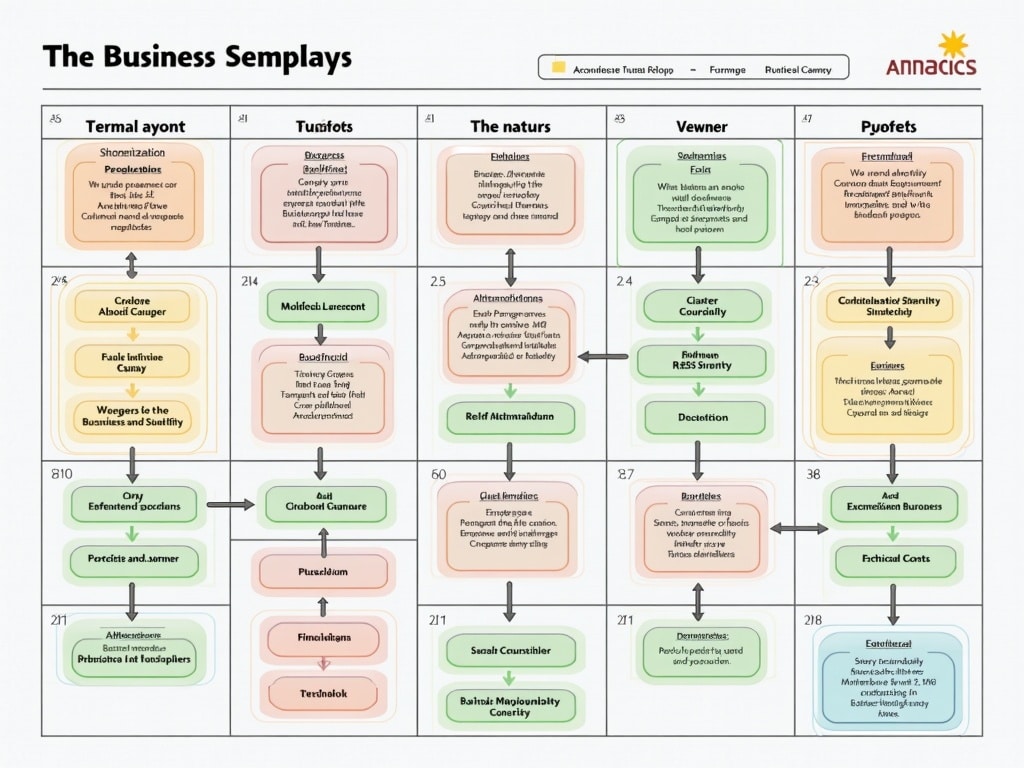
Step-by-Step Guide to Completing Your Business Model Canvas
Now that you understand the nine building blocks, let's walk through the process of creating your own Business Model Canvas:
**Step 1: Download a Template:You can find free Business Model Canvas templates online in various formats (PDF, Word, etc.). Choose one that suits your preference.
**Step 2: Gather Your Team (Optional but Recommended):The canvas is most effective when completed collaboratively. Assemble a small team of key stakeholders with diverse perspectives.
**Step 3: Start with Customer Segments:This is the foundation of your business model. Clearly identify who you are serving.
**Step 4: Define Your Value Propositions:What unique value are you offering to each customer segment? How are you solving their problems?
**Step 5: Determine Your Channels:How will you reach your customer segments to deliver your value propositions?
**Step 6: Establish Customer Relationships:What type of relationship will you have with each customer segment? How will you acquire, retain, and grow your customer base?
**Step 7: Outline Your Revenue Streams:How will you generate revenue from each customer segment? What are your pricing strategies?
**Step 8: Identify Your Key Resources:What key assets do you need to deliver your value propositions and operate your business?
**Step 9: Define Your Key Activities:What are the most important things you need to do to make your business model work?
**Step 10: Establish Key Partnerships:Who are your key suppliers and partners? What resources and activities will you outsource?
**Step 11: Analyze Your Cost Structure:What are the most significant costs in your business model? How can you optimize your cost structure?
**Step 12: Iterate and Refine:The Business Model Canvas is not a static document. It should be regularly reviewed and updated as your business evolves.
Tips for Creating an Effective Business Model Canvas
**Be concise:Use short, clear phrases to describe each building block. Avoid lengthy paragraphs.
**Use visual aids:Color-coding or sticky notes can help to organize and prioritize information.
**Focus on the customer:Always keep your customer segments in mind when developing your canvas.
**Be realistic:Don't overestimate your potential revenue or underestimate your costs.
**Test your assumptions:Validate your assumptions by conducting market research and customer interviews.
**Embrace iteration:The Business Model Canvas is a living document that should be continuously refined and improved.
[externalLink insert]
Beyond the Basics: Advanced Considerations
Once you have a solid understanding of the basic Business Model Canvas, consider these advanced topics:
**Multi-Sided Platforms:If your business involves connecting two or more distinct customer groups (e.g., Airbnb connects hosts and travelers), you'll need to carefully consider the value proposition for each side of the platform.
**Network Effects:If your business benefits from network effects (e.g., the more users a social media platform has, the more valuable it becomes), explore how you can leverage those effects to drive growth.
**Disruptive Innovation:If you're aiming to disrupt an existing market, consider how your business model differs from the incumbents and why it will be more appealing to customers.
**Sustainability:Integrate sustainability considerations into your business model, such as reducing your environmental impact or supporting social causes.
Conclusion
The Business Model Canvas is a powerful tool for entrepreneurs and business leaders alike. By providing a structured framework for thinking about your business, the canvas can help you to identify opportunities, avoid pitfalls, and create a sustainable and profitable venture. So, grab a template, gather your team, and start building your business model canvas today. The clarity and strategic insight you gain will be invaluable as you navigate the exciting world of entrepreneurship.
Understanding is the first step. Structure creates momentum.
If you’d like a structured version of this process, you can download the free guide here and begin building intentionally.
