
Content Marketing Funnel Explained: A Comprehensive Guide
Ever feel like your content marketing efforts are shouting into the void? You're creating blog posts, crafting social media updates, and maybe even producing videos, but the needle barely moves. The problem might not be your content quality, but how you're guiding your audience through their buyer's journey. That's where the content marketing funnel comes in – a strategic framework to transform prospects into loyal customers through targeted content.
What is a Content Marketing Funnel?
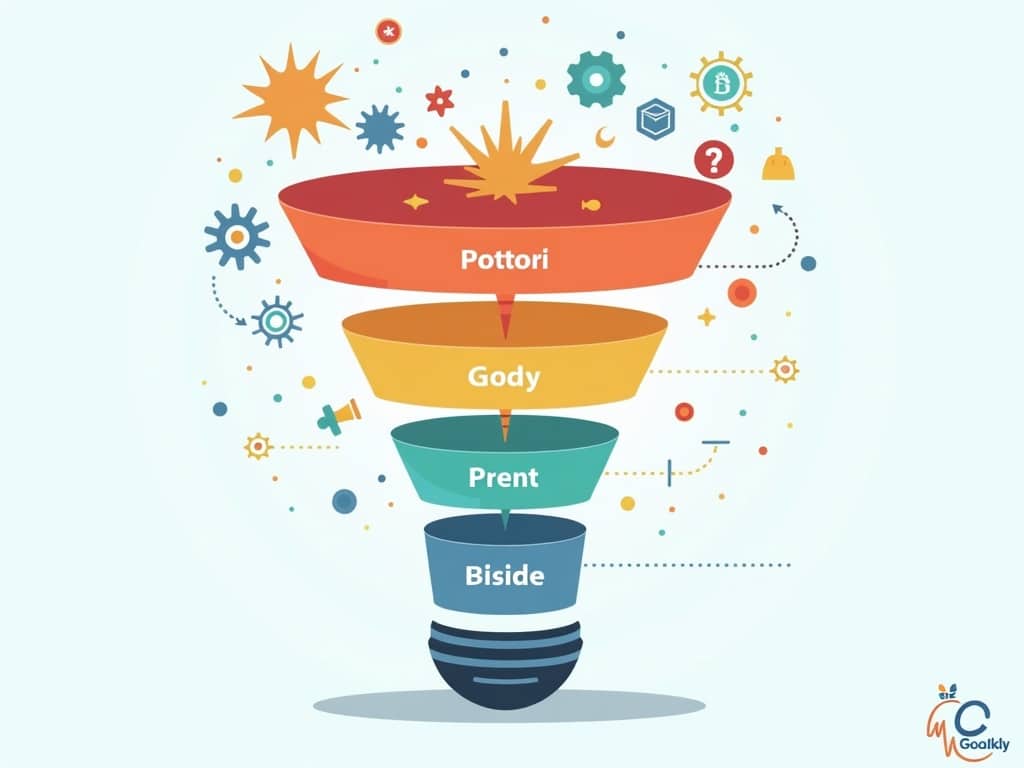
The content marketing funnel is a visual representation of the customer journey, broken down into stages. It maps the path a potential customer takes from first discovering your brand to finally making a purchase (and hopefully becoming a repeat customer). It's called a funnel because, at each stage, some prospects will drop out, leaving fewer and fewer people as you move towards the bottom – the conversion point. Each stage of the funnel requires different content tailored to address the specific needs and concerns of the audience at that point in their journey.
The Classic Stages of a Content Marketing Funnel
While variations exist, the most common content marketing funnel consists of these key stages:
- Awareness (Top of Funnel – TOFU): This is where prospects first become aware of your brand and the solutions you offer. They might find you through a Google search, a social media post, or a referral.
- Interest (Middle of Funnel – MOFU): At this stage, prospects are intrigued and want to learn more. They're researching their problem and evaluating different solutions.
- Consideration (Middle of Funnel – MOFU): Prospects are seriously considering your product or service to solve their problem. They're comparing you to competitors and looking for the best fit.
- Decision (Bottom of Funnel – BOFU): Prospects are ready to buy. They're looking for final validation, pricing information, and answers to any remaining questions.
- Advocacy (Post-Purchase): Customers are so happy with your product or service that they become advocates, recommending you to others. This stage is crucial for long-term growth and brand building.
Why is a Content Marketing Funnel Important?
Without a defined content marketing funnel, your efforts are likely scattered and ineffective. Here's why it's a vital component of a successful marketing strategy:
- Targeted Content Creation: A funnel helps you create content that speaks directly to the needs of your audience at each stage. No more generic blog posts that appeal to no one.
- Improved Lead Generation: By providing valuable content at each stage, you attract and nurture leads, guiding them closer to a purchase.
- Increased Conversion Rates: A well-structured funnel streamlines the buying process, making it easier for prospects to convert into customers. This is achieved by providing the right information at the right time.
- Enhanced Customer Loyalty: By continuing to engage with customers even after the purchase, you foster loyalty and encourage repeat business and advocacy.
- Measurable Results: A funnel allows you to track the performance of your content at each stage and identify areas for improvement. You can use analytics to see where prospects are dropping off and optimize your content accordingly.
Building Your Content Marketing Funnel: A Step-by-Step Guide
Creating an effective content marketing funnel requires careful planning and execution. Here's a breakdown of the process:
1. Define Your Target Audience
Before you create any content, you need to know who you're talking to. Develop detailed buyer personas that represent your ideal customers. Consider their demographics, psychographics, pain points, goals, and online behavior. What are their common questions? What challenges do they face? Where do they spend their time online? Answering these questions will inform the type of content you create and where you promote it.
2. Map Content to Each Funnel Stage
Once you understand your target audience, you can start mapping out the content you'll create for each stage of the funnel. Here are some examples:
- Awareness (TOFU):
- Blog posts (e.g., The Ultimate Guide to…)
- Infographics
- Social media updates
- Ebooks
- Free tools & templates
- Guest posts on relevant websites
- Interest (MOFU):
- Email newsletters
- Case studies
- Webinars
- Podcasts
- White papers
- Checklists
- Consideration (MOFU):
- Product demos
- Free trials
- Comparison guides (e.g., [Your Product] vs. [Competitor Product])
- Testimonials
- Spec Sheets
- Decision (BOFU):
- Pricing pages
- Sales calls
- Consultations
- Live Chat
- Coupons & discounts
- Advocacy (Post-Purchase):
- Loyalty programs
- Customer surveys
- Exclusive content for customers
- Community Forums
- Referral programs
Remember to choose content formats that align with your audience's preferences and the stage of the funnel. For instance, someone in the awareness stage might be more receptive to a short, engaging infographic than a lengthy white paper.
3. Create High-Quality Content
This might seem obvious, but it's worth emphasizing: your content must be valuable, informative, and engaging. Focus on providing solutions to your audience's problems and answering their questions. Use clear, concise language and avoid jargon. Optimize your content for search engines (SEO) to ensure it's easily discoverable. Pay attention to detail – proofread for grammar and spelling errors, use high-quality visuals, and ensure your content is mobile-friendly.
4. Promote Your Content
Creating great content is only half the battle. You also need to promote it effectively. Here are some tactics to consider:
- Search Engine Optimization (SEO): Optimize your content for relevant keywords to improve your search engine rankings.
- Social Media Marketing: Share your content on social media platforms where your target audience is active.
- Email Marketing: Promote your content to your email subscribers.
- Paid Advertising: Use paid advertising (e.g., Google Ads, social media ads) to reach a wider audience.
- Influencer Marketing: Partner with influencers in your industry to promote your content.
- Content Syndication: Republish your content on other websites (with proper attribution).
5. Track and Measure Your Results
It's essential to track the performance of your content marketing funnel to see what's working and what's not. Use web analytics tools like Google Analytics to monitor key metrics, such as traffic, bounce rate, lead generation, and conversion rates. Pay attention to which content is generating the most engagement and which stages of the funnel are performing well. Then you can see the power of [externalLink insert] when you track where you are in the sales funnel. Identify bottlenecks where prospects are dropping off and optimize your content or strategy accordingly.
Optimizing Your Content Marketing Funnel for Maximum Impact
Once you've built your content marketing funnel, it's crucial to continuously optimize it for better results. Here are some advanced strategies to consider:
1. Personalization
Personalize your content based on your audience's demographics, behavior, and where they are in the funnel. Use marketing automation tools to deliver targeted content to individual leads based on their actions. For example, if someone downloads a specific ebook, send them a follow-up email with related content.
2. Retargeting
Retargeting allows you to show ads to people who have previously visited your website but haven't yet converted. This is a powerful way to re-engage prospects and guide them further down the funnel. For example, if someone viewed a product page but didn't add the item to their cart, you can show them ads for that product on other websites and social media platforms.
3. Lead Scoring
Lead scoring is a system that assigns points to leads based on their characteristics and behavior. This helps you identify the most qualified leads and focus your sales efforts on them. For example, you might assign points for downloading a white paper, visiting a pricing page, or requesting a demo.
4. A/B Testing
A/B testing involves creating two versions of a piece of content (e.g., a landing page, email subject line, or ad copy) and testing them against each other to see which performs better. This is a great way to optimize your content for maximum conversion rates.
5. Integrate with Your CRM
Connecting your content marketing efforts with your Customer Relationship Management (CRM) system provides a centralized view of your leads and customers. This integration enables you to track the effectiveness of your content across the entire customer journey, personalize interactions, and streamline your sales and marketing processes.
Common Mistakes to Avoid in Your Content Marketing Funnel
Even with a well-defined strategy, it's easy to make mistakes that can undermine your content marketing efforts. Here are some common pitfalls to avoid:
- Ignoring the Buyer's Journey: Creating content that doesn't align with the needs and concerns of your audience at each stage of the funnel.
- Focusing Too Much on Sales: Pushing for sales too early in the funnel, before prospects are ready to buy.
- Neglecting Content Promotion: Creating great content but failing to promote it effectively.
- Failing to Track Results: Not tracking the performance of your content and making adjustments as needed.
- Inconsistent Branding: Using inconsistent branding across your content and marketing channels.
- Poor Quality Content: Creating low-quality, uninformative, or poorly written content.
The Future of Content Marketing Funnels
The content marketing landscape is constantly evolving, and content marketing funnels are no exception. Here are some trends to watch out for:
- AI-Powered Personalization: Artificial intelligence (AI) is being used to personalize content at scale, delivering tailored experiences to individual users.
- Interactive Content: Interactive content, such as quizzes, calculators, and assessments, is becoming increasingly popular as a way to engage audiences and generate leads.
- Video Marketing: Video continues to be a dominant force in content marketing, with more and more businesses using video to connect with their audience at all stages of the funnel.
- Voice Search Optimization: Voice search is becoming increasingly prevalent, so it's important to optimize your content for voice queries.
- Focus on Customer Experience: Businesses are increasingly focused on providing a seamless and personalized customer experience across all touchpoints, including content marketing.
Final Thoughts
The content marketing funnel is a powerful framework for attracting, engaging, and converting prospects into loyal customers. By creating targeted content for each stage of the buyer's journey, you can guide potential customers towards a purchase and build long-term relationships. Remember to continuously optimize your funnel based on data and adapt to the evolving content marketing landscape. A well-executed content marketing funnel can transform your marketing efforts from a shot in the dark to a laser-focused strategy that delivers real results.
Understanding is the first step. Structure creates momentum.
If you’d like a structured version of this process, you can download the free guide here and begin building intentionally.
