
Client Journey Mapping for Service Businesses: A Deep Dive
Imagine a prospect, hovering on the edge of becoming your client. They've heard whispers of your expertise, seen glimpses of your success, but something is holding them back. What is it? Understanding *thatsomething is the key to unlocking explosive growth for your service business, and client journey mapping is the treasure map.
What is Client Journey Mapping?
Client journey mapping is the visual representation of your client's experience, from initial awareness to long-term advocacy. It's about stepping into their shoes and seeing your business through their eyes. It's not about *yourprocesses; it's about *theirexperience. It's about identifying their pain points, understanding the questions they ask, and recognizing the emotions they feel at each stage of their interaction with your company.
Unlike a sales funnel, which focuses purely on the transaction, a client journey map considers the holistic experience. It encompasses everything from their first Google search to the moment they recommend your services to a friend.
Why is Client Journey Mapping Crucial for Service Businesses?
Service businesses are built on relationships. Unlike selling a product, you're selling expertise, trust, and a specific outcome. This makes the *experienceparamount. A positive client journey:
**Increases Client Retention:Happy clients are loyal clients. By proactively addressing their needs and exceeding expectations, you foster long-term relationships.
**Boosts Referrals:Word-of-mouth is gold for service businesses. A seamless and enjoyable client journey turns clients into enthusiastic advocates.
**Identifies Areas for Improvement:Mapping exposes friction points and inefficiencies in your service delivery, leading to optimization.
**Enhances Marketing Effectiveness:Understanding the client journey informs your marketing efforts, allowing you to target the right message to the right people at the right time.
**Differentiates You from Competitors:In a crowded market, a superior client experience can be your biggest differentiator.
The Key Stages of the Client Journey
While the specifics will vary depending on your industry and target audience, the typical client journey for a service business includes these stages:
1. **Awareness:The client recognizes they have a problem and begins searching for solutions. This is where they might discover your content, see your ads, or hear about you from a referral.
2. **Consideration:The client researches different options, comparing your services, pricing, and reputation to competitors. They might visit your website, read case studies, or request a consultation.
3. **Decision:The client chooses your service and becomes a paying customer. This involves signing a contract, making a payment, and officially onboarding.
4. **Service Delivery:You provide the agreed-upon services, maintaining clear communication and delivering on your promises. This is where you build trust and demonstrate your expertise.
5. **Retention:You cultivate the client relationship, ensuring their continued satisfaction and identifying opportunities for upselling or cross-selling.
6. **Advocacy:The client becomes a vocal supporter, recommending your services to others and providing positive reviews and testimonials.
How to Create a Client Journey Map for Your Service Business
Creating an effective client journey map is a collaborative process that requires input from various departments within your organization. Here’s a step-by-step guide:
1. **Define Your Target Audience (Buyer Persona):You can’t map a journey without knowing who’s taking it. Create detailed buyer personas that represent your ideal clients, including their demographics, motivations, pain points, and goals. Give them names and stories.
2. **Set Clear Objectives:What do you hope to achieve with your client journey map? Are you trying to increase client retention, boost referrals, or improve customer satisfaction? Having clear goals will keep your mapping efforts focused.
3. **Research and Gather Data:This is where the real work begins. Collect data from various sources to understand your clients’ experiences. Here are some options:
**Client Surveys:Use online survey tools to gather feedback on specific aspects of the client journey.
**Client Interviews:Conduct one-on-one interviews to gain deeper insights into their motivations, pain points, and overall experience.
**Website Analytics:Track user behavior on your website to see how clients are interacting with your content and identify potential roadblocks.
**Social Media Monitoring:Monitor social media channels to see what clients are saying about your business and your competitors.
**Sales and Support Team Feedback:Your sales and support teams are on the front lines, interacting with clients every day. Tap into their knowledge and insights.
**Review Platforms:Analyze reviews on platforms like Google, Yelp, and industry-specific sites to identify recurring themes and areas for improvement.
4. **Identify Touchpoints:A touchpoint is any interaction a client has with your business, from visiting your website to receiving a phone call. List all the touchpoints a client might encounter during their journey.
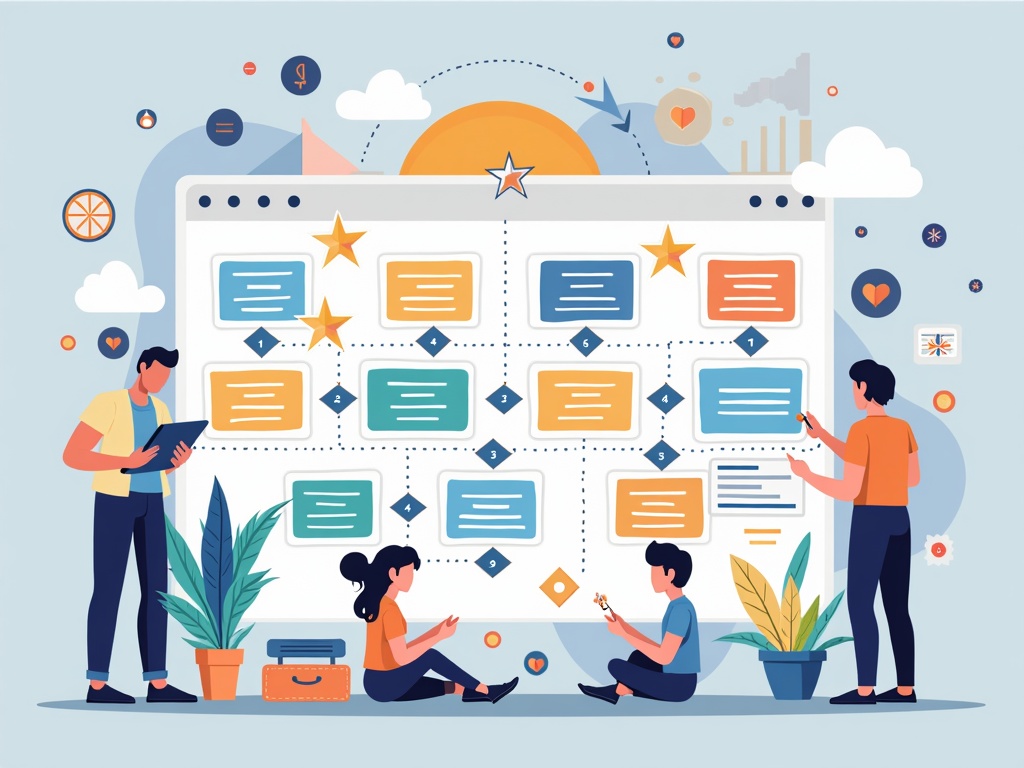
5. **Map the Journey:Now it's time to visually map the client journey. You can use a simple spreadsheet, a whiteboard, or specialized client journey mapping software. For each stage of the journey, document the following:
**Actions:What is the client doing at this stage?
**Thoughts:What is the client thinking at this stage?
**Emotions:What is the client feeling at this stage? Pay close attention to pain points and moments of frustration.
**Touchpoints:What touchpoints are involved in this stage?
**Opportunities:What opportunities exist to improve the client experience at this stage?
Consider using different colors or symbols to represent different aspects of the journey, such as pain points, moments of delight, or areas for improvement.
6. **Analyze and Identify Gaps:Once you've mapped the journey, carefully analyze the results to identify gaps and areas for improvement. Look for patterns and recurring themes. Where are clients getting stuck? Where are they experiencing frustration? Where are there opportunities to exceed their expectations?
7. **Develop and Implement Solutions:Based on your analysis, develop and implement solutions to address the identified gaps. This might involve:
**Improving your website design and navigation.**
**Streamlining your onboarding process.**
**Providing more proactive communication.**
**Investing in better training for your staff.**
**Creating more helpful resources.**
**Revamping your pricing structure.**
Prioritize your efforts based on the impact each solution is likely to have on the client experience and the ease with which it can be implemented.
8. **Test and Iterate:Client journey mapping is an ongoing process, not a one-time event. Once you've implemented solutions, test them to see if they're having the desired effect. Gather feedback from clients and continue to iterate and improve your map over time.
Tools and Templates for Client Journey Mapping
You don't need fancy software to get started with client journey mapping. A simple spreadsheet or whiteboard can be surprisingly effective. However, if you're looking for more sophisticated tools, here are a few popular options:
**Miro:A collaborative whiteboard platform that's perfect for visual brainstorming and journey mapping.
**Microsoft Visio:A diagramming tool that allows you to create detailed process flows and client journey maps.
**Lucidchart:A web-based diagramming tool with templates specifically designed for client journey mapping.
**Smaply:A dedicated client journey mapping platform with features for visualizing personas, touchpoints, and emotions.
**Custellence:Another dedicated platform with a focus on collaboration and data integration.
Many of these tools offer free trials or limited free plans, so you can experiment to see which one best suits your needs. You can also find free client journey map templates online that you can adapt to your specific business. [externalLink insert]
Examples of Client Journey Mapping in Action
Let's look at a couple of hypothetical examples of how client journey mapping can benefit service businesses:
**Example 1: A Marketing Agency**
A marketing agency maps its client journey and discovers that clients often feel confused and overwhelmed during the onboarding process. They address this by creating a welcome kit with clear explanations of their services, processes, and communication protocols. They also assign each new client a dedicated account manager who is responsible for guiding them through the onboarding process and answering their questions. As a result, client satisfaction increases, and client churn decreases.
**Example 2: A Financial Consulting Firm**
A financial consulting firm maps its client journey and identifies that clients often struggle to understand the complex financial reports they receive. They respond by simplifying the reports and providing personalized explanations to each client. They also offer regular check-in meetings to answer questions and provide ongoing support. This leads to increased client trust and stronger, longer-lasting relationships.
Common Mistakes to Avoid When Client Journey Mapping
Client journey mapping, while powerful, can be ineffective if done incorrectly. Here are some common pitfalls to avoid:
**Making assumptions:Don't assume you know what your clients are thinking or feeling. Base your map on data and research, not gut feelings.
**Focusing on your processes, not the client's experience:Remember, it's about *theirperspective, not yours.
**Creating a map that's too complex:Keep it simple and focused on the most important touchpoints and pain points.
**Treating it as a one-time event:Client journey mapping is an ongoing process that requires continuous monitoring, analysis, and improvement.
**Ignoring the emotional component:Emotions play a significant role in the client experience. Be sure to capture how clients are feeling at each stage of the journey.
**Failing to involve key stakeholders:Get input from all departments that interact with clients, including sales, marketing, support, and operations.
The Future of Client Journey Mapping
As technology continues to evolve, client journey mapping will likely become even more sophisticated and data-driven. AI-powered analytics will provide deeper insights into client behavior, sentiment analysis will help you understand their emotions, and personalized experiences will become the norm.
The rise of omnichannel marketing means that client journeys are becoming increasingly complex, spanning multiple channels and devices. Businesses will need to adopt a holistic approach to client journey mapping, ensuring a seamless and consistent experience across all touchpoints.
Conclusion: Embark on Your Mapping Adventure
Client journey mapping is not merely a trendy exercise; it's a fundamental strategy for service businesses aiming for sustainable growth. By understanding your client's perspective, identifying pain points, and proactively addressing their needs, you can create a superior experience that fosters loyalty, drives referrals, and ultimately sets you apart from the competition. So, gather your team, sharpen your pencils (or fire up your favorite mapping tool), and embark on your client journey mapping adventure today. The rewards are well worth the effort.
Understanding is the first step. Structure creates momentum.
If you’d like a structured version of this process, you can download the free guide here and begin building intentionally.
