
Marketing Funnel vs. Sales Funnel: What’s the Real Difference?
Imagine trying to fill a leaky bucket. You pour water in, but much of it spills out before you can use it. That's what running a business without a properly defined funnel feels like. You're putting in effort, but not seeing the optimal results. Often, the terms marketing funnel and sales funnel are used interchangeably, causing confusion. But are they truly the same? Understanding the nuances can be the key to plugging those leaks and maximizing your conversion rates. Let's dive into the distinct roles each funnel plays in transforming prospects into loyal customers.
Defining the Marketing Funnel
Think of the marketing funnel as the wider net you cast to attract potential customers. It encompasses all the stages a prospect goes through from initially becoming aware of your brand to expressing interest in your product or service. The core mission of the marketing funnel is lead generation and nurturing.
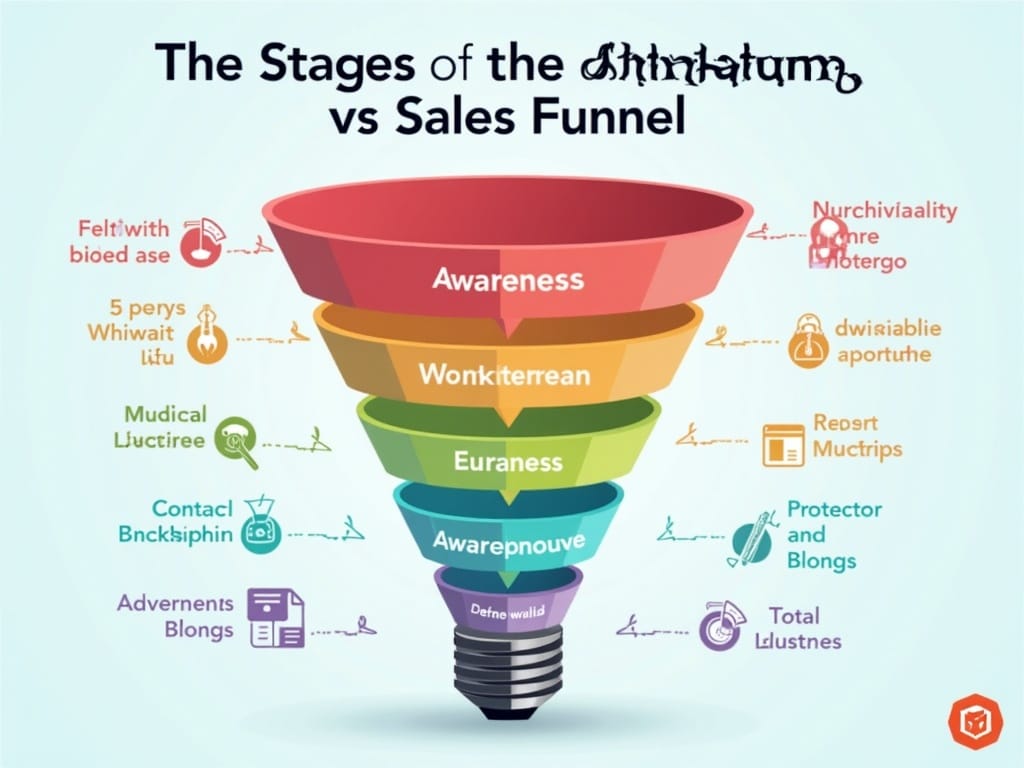
The Stages of the Marketing Funnel:
- Awareness: This is the top of the funnel (TOFU). Prospects become aware of your brand through various marketing channels like social media, blog posts, search engine results, or advertising. Content at this stage is broad and educational, aiming to attract a wide audience.
- Interest: Here, prospects start showing interest in what you offer. They might subscribe to your newsletter, download a free ebook, or follow you on social media. Marketing efforts focus on providing valuable content that resonates with their needs and challenges.
- Consideration: Prospects are now actively considering your product or service as a solution. They might compare your offerings with competitors, read case studies, or watch product demos. The aim is to demonstrate your unique value proposition and build trust.
- Intent: Leads demonstrate intent to purchase. They might fill out a contact form, request a quote, or add items to their online shopping cart. This is the stage where marketing and sales begin to align closely.
Purpose of a Marketing Funnel
The primary goals of a marketing funnel are:
- Generate Leads: Attract potential customers and capture their contact information.
- Nurture Leads: Provide valuable content and build relationships to guide prospects through the funnel.
- Qualify Leads: Identify prospects who are most likely to become customers.
- Drive Traffic: Increase traffic to your website and other online platforms.
Defining the Sales Funnel
The sales funnel is a more focused process that takes over where the marketing funnel leaves off. It concentrates on converting qualified leads into paying customers. Think of it as the process that guides a prospect from expressing purchase intent to actually closing the deal.
The Stages of the Sales Funnel
- Evaluation: The sales team evaluates the lead's potential and assesses their needs. This stage involves understanding the prospect's specific requirements and challenges.
- Engagement: Sales representatives actively engage with the lead through phone calls, emails, demos, or presentations. The aim is to build rapport and provide tailored solutions.
- Proposal/Quote: A formal proposal or quote is presented to the lead, outlining the product or service, pricing, and terms of agreement.
- Closing: This is the final stage where the sales team attempts to close the deal and convert the lead into a paying customer. It may involve negotiation, addressing objections, and finalizing the agreement.
Purpose of a Sales Funnel
The main purposes of a sales funnel are:
- Convert Leads: Transform qualified leads into paying customers.
- Maximize Revenue: Increase sales and revenue by effectively closing deals.
- Improve Sales Efficiency: Streamline the sales process and improve the productivity of the sales team.
- Forecast Sales: Gain insights into sales trends and forecast future revenue.
Key Differences: Marketing Funnel vs. Sales Funnel
While both funnels work together to drive business growth, understanding their distinctions is crucial for effective strategy. Here's a breakdown of the key differences:
| Feature | Marketing Funnel | Sales Funnel |
|---|---|---|
| Focus | Generating and nurturing leads. | Converting leads into customers. |
| Ownership | Marketing Team. | Sales Team. |
| Metrics | Website traffic, lead generation rate, conversion rates (e.g., visitor to lead). | Conversion rates (e.g., lead to customer), average deal size, sales cycle length. |
| Content | Blog posts, social media updates, ebooks, webinars (educational and informative). | Product demos, case studies, proposals, quotes (product- or service-specific). |
| Interaction | Primarily digital and automated (e.g., email marketing, content marketing). | Personalized and direct (e.g., phone calls, sales meetings). |
| Goal | To create awareness and interest, and qualify leads for sales. | To close deals and generate revenue. |
How the Marketing and Sales Funnels Work Together
The most successful businesses understand that the marketing and sales funnels aren't isolated entities. They are interconnected and should work in harmony to achieve overall business goals. The marketing funnel feeds the sales funnel with qualified leads, and the sales funnel provides feedback to marketing on the quality of those leads. This feedback loop allows marketing to refine its strategies and improve the quality of leads generated. Often, a CRM system is used to track progress through both funnels.
For instance, if the sales team consistently finds that leads generated from a particular marketing campaign are not well-qualified, then the marketing team can adjust the targeting or messaging of that campaign. Similarly, if the sales team identifies common objections or concerns from leads, the marketing team can create content that addresses those concerns and helps to overcome objections before they even arise in the sales process. Hubspot offers a range of helpful resources on this topic [externalLink insert].
Quick note: If you’d like a structured version of this process, you can download the free guide here.
Building Effective Marketing and Sales Funnels
Creating effective funnels requires careful planning and execution. Here are some key steps to consider:
1. Define Your Target Audience
Understanding your ideal customer is the foundation of any successful funnel. Develop detailed buyer personas that outline their demographics, psychographics, needs, and pain points. This information will guide your marketing and sales efforts.
2. Map Out Your Customer Journey
Visualize the steps your prospects take from initial awareness to becoming a customer. Identify the touchpoints they interact with along the way and the content or information they need at each stage.
3. Create Compelling Content
Develop content that resonates with your target audience and addresses their needs at each stage of the funnel. This includes blog posts, social media updates, ebooks, case studies, product demos, and more.
4. Implement Marketing Automation
Automate repetitive tasks like sending emails, nurturing leads, and scoring leads to improve efficiency and effectiveness. Marketing automation tools can help you personalize your messaging and deliver the right content to the right people at the right time.
5. Train Your Sales Team
Equip your sales team with the knowledge, skills, and tools they need to effectively engage with leads and close deals. Provide ongoing training on product knowledge, sales techniques, and customer relationship management.
6. Track and Measure Your Results
Monitor key metrics like website traffic, lead generation rate, conversion rates, and average deal size to evaluate the effectiveness of your funnels. Use data to identify areas for improvement and optimize your strategies over time.
Common Mistakes to Avoid
Even with careful planning, there are some common pitfalls to avoid when building and managing your marketing and sales funnels:
- Ignoring the Hand-off: Failing to clearly define the point at which leads transition from marketing to sales can lead to confusion and lost opportunities.
- Inconsistent Messaging: If your marketing and sales messages are not aligned, it can create a disjointed experience for prospects and damage your brand credibility.
- Neglecting Lead Nurturing: Not all leads are ready to buy immediately. Neglecting to nurture leads over time can result in missed opportunities.
- Lack of Personalization: Generic messaging and impersonal interactions can turn off prospects. Personalize your communications based on their needs and interests.
- Not Tracking and Analyzing Data: Without data, you're flying blind. Tracking and analyzing your funnel metrics is essential for identifying areas for improvement.
The Future of Funnels: A More Holistic Approach
The traditional linear funnel is evolving into a more fluid and customer-centric model. Businesses are increasingly recognizing the importance of creating a seamless and personalized experience for customers throughout their entire journey, from initial awareness to long-term loyalty. This means breaking down silos between marketing and sales, and focusing on building relationships with customers at every touchpoint.
Conclusion
While the marketing and sales funnels are distinct, they are intrinsically linked in driving business success. The marketing funnel focuses on attracting, engaging, and qualifying leads, while the sales funnel concentrates on converting those leads into paying customers. By understanding the nuances of each funnel and how they work together, businesses can create a more effective and efficient process for acquiring and retaining customers. So, plug those leaks, optimize your funnels, and watch your business grow.
Understanding is the first step. Structure creates momentum.
If you’d like a structured version of this process, you can download the free guide here and begin building intentionally.
